
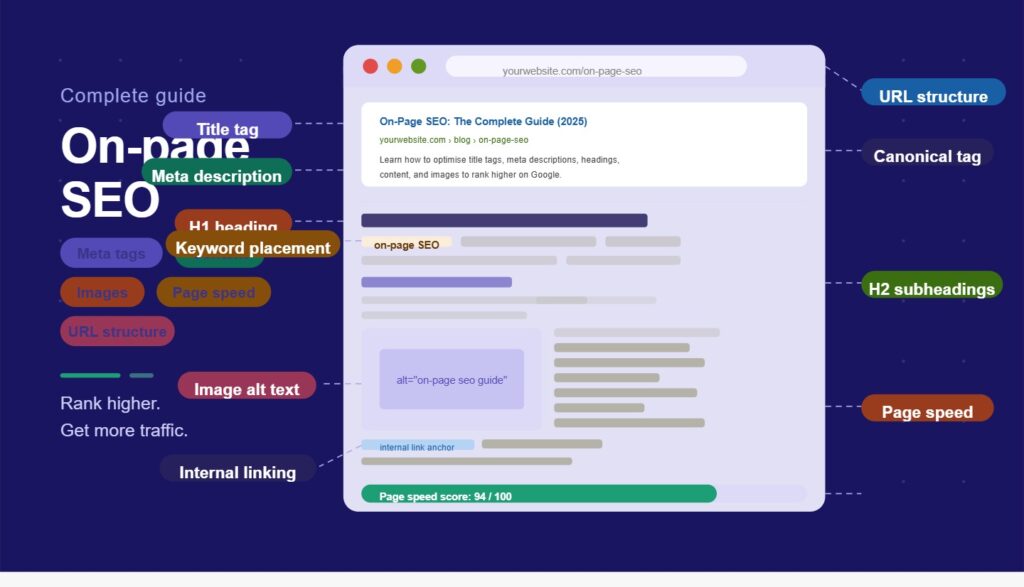
Introduction:
- On-page SEO is basically the base of ranking any website on Google. Like, if your content is not properly optimized, even a really good topic might not rank at all.
- But when you start using the right structure, place your keywords in the correct spots, and follow a simple content strategy, your chances of ranking go up a lot.
- In this guide, I’ll just walk you through what you actually need to do, step by step, in a simple way so you can easily understand and try it yourself.
What is On-Page SEO?
It means you are optimizing everything inside your website
It includes things like your content, headings, keywords, images, and some basic HTML stuff
It basically helps search engines understand what your content is about in a clear way
Why On-Page SEO is Important?
It helps your page rank on Google, simple as that
You can get free traffic without running ads, which is always good
It also makes your website easier to use, so people don’t get confused
Because of that, users usually stay longer on your site
Example:
Let’s say two websites are talking about the same topic. The one that has better on-page SEO, like clear headings, proper keywords, and good structure, will most likely rank higher on Google.
Complete On-Page SEO Strategy
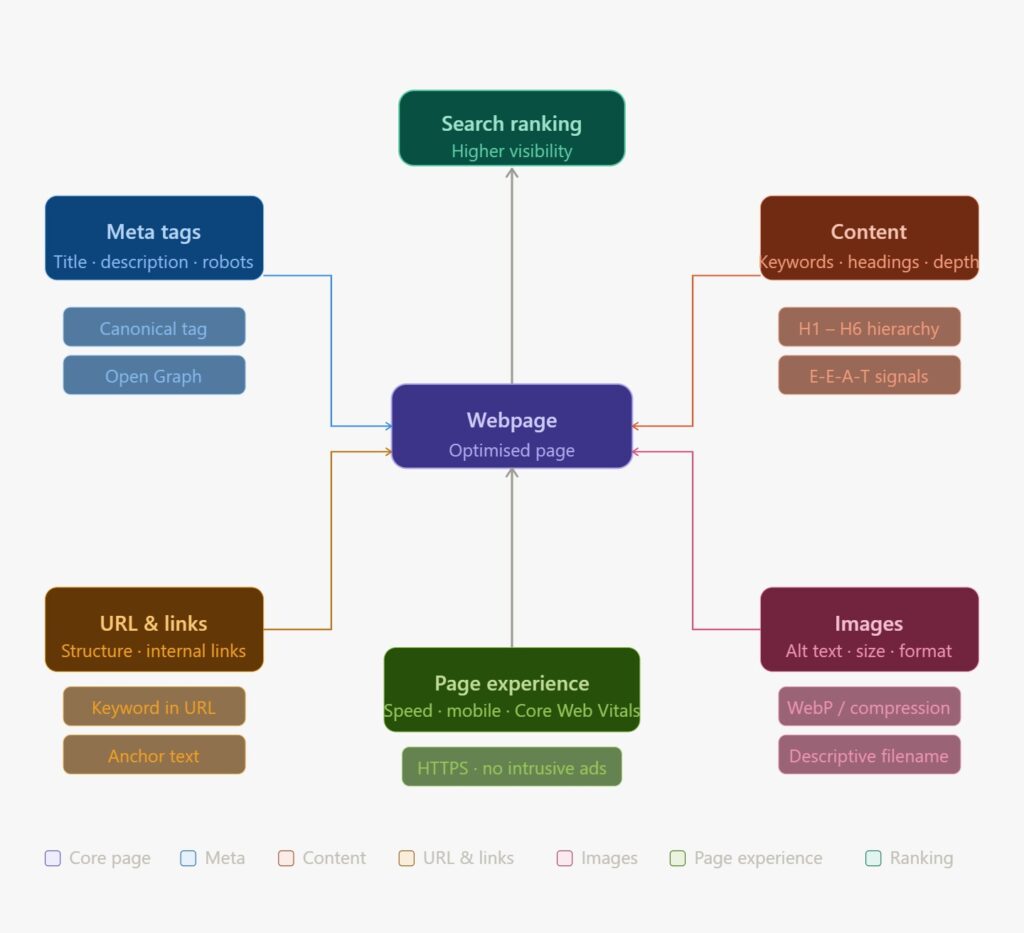
1. Keyword Research (Start Here)
- Try to pick keywords that have low competition but still decent search volume
- You can use tools like Google Keyword Planner or Ubersuggest to find them
- Focus more on long-tail keywords because they are easier to rank for
Example:
Instead of just using “SEO”, go for something more specific like
“on page seo guide for beginners 2026”
2. Title Tag Optimization
Try to add your keyword at the beginning of the title
Keep the title under 60 characters so it doesn’t get cut in search results
You can use simple power words like “Best”, “Guide”, “Easy” to make it more clickable
3. Meta Description
Keep it around 140–160 characters, no need to be exact but stay close
Add your keyword naturally, don’t force it
Write it in a way that makes someone actually want to click
Example:
Learn on-page SEO step by step and start ranking your website faster with this simple beginner-friendly guide
4. Proper Heading Structure
- Use only one H1
- Use H2 for main sections
- Use H3 for subpoints
Correct structure improves readability.
5. URL Optimization
- Keep URL short and simple
- Add your main keyword
6. Content Optimization
- Write at least 1000–1500 words
- Use simple and clear language
- Add examples and useful information
- Break content into small paragraphs
Google prefers helpful content, not just keyword-filled content.
7. Keyword Placement Strategy
Use your main keyword in:
- Title
- First 100 words
- Headings (H2/H3)
- URL
- Conclusion
Keep keyword density around 1–2%
8. Internal Linking
- Link to your own related posts
- Use relevant anchor text
Example:
If you wrote about keyword research, link it inside your SEO post.
9. Image Optimization
- Add ALT text with keyword
- Compress images to reduce size
- Use clear file names
Example:
on-page-seo-checklist.jpg
10. Page Speed Optimization
- Website should load in under 3 seconds
- Use lightweight themes
- Avoid too many plugins
Slow websites lose ranking and traffic.
11. Mobile Optimization
- Website must be mobile-friendly
- Text should be readable
- Buttons should be clickable
Most users visit from mobile, so this is important.
Pro Tips for Faster Ranking
- Always target low competition keywords
- Publish content regularly (2–3 posts per week)
- Update old posts with new information
- Use simple language for better readability
Common Mistakes to Avoid
- Keyword stuffing
- Copy-paste content
- Ignoring internal links
- Using long and confusing URLs
- Not optimizing images
Conclusion:
On-page SEO is something you fully control on your website. If you follow the right steps, use low difficulty keywords properly, and write humanize content that actually helps people, your site can start ranking even if it’s new. Just stay consistent and keep improving your posts little by little, Use Rank Match or Yoast for ranking website and over time you’ll start seeing results.