
Keyword Research is basically about finding the words and queries that people type on search engines. These words help your blogs, posts, and pages show up on Google and other search engines. Doing proper keyword research really matters — if you pick the right keyword, it goes in front of the right people. For example, if you do blog on digital marketing and you made a blog on ‘How to Create a Website’ and used the keyword in a right way, then your blog and website start ranking on Google.

Terms of Keyword Research
It is a very important, or you can say the most important, step for SEO. There are different types of keywords, knowing them will help you in doing research.
1. Short-tail keywords
- These are small keywords like “SEO” or “website.”
- They have high search volume but also high competition.
2. Long-tail keywords
- These are longer phrases like “how to create a website step by step.”
- They have low competition and are easier to rank.
3. Low competition keywords
These keywords are easier to rank. Beginners should focus on these.
4. High volume keywords
These keywords get more searches, but they are harder to rank.
You should try to find a balance between low competition and good search volume.
You don’t need advanced tools in the beginning. You can start with simple methods.
5. Google Search Suggestions
Type a keyword in Google search bar. It will show suggestions. These are real searches by users.
Example:
Type “keyword research” → you may see
- keyword research tools
- keyword research for beginners
- keyword research free
6. “People also ask” section
Google shows questions related to your keyword. You can use them as subheadings.
Free tools to use for keyword Research
- Ubersuggest
- AnswerThePublic
- semrush
- ahrefs
These tools show search volume and competition.
Everyone can easily get keywords, but to find keywords strategically, it is necessary to gain knowledge. For better results, you should check
- Your Search volume: At least 100–1000 searches per month for beginners
- Keyword difficulty: Low or medium is better
- User intent: What the user wants to know
Positive Example:
- “Keyword research” is very broad
- Keyword Research – Where to Use Keywords in Content
- Using keywords in the right place helps SEO.
7. You should add your keyword in:
- Title (very important)
- H1 heading
- H2 headings
- First paragraph
- Throughout the content (but naturally)
- Meta description
Do not repeat the keyword too many times. It should feel natural while reading.
Negative example:
Through research, we understand what people search for online, we can check their volume, keyword difficulty, everything.
You can see the second example sounds natural.
Research – Common Mistakes to Avoid
Many beginners make simple mistakes.
- Choosing only high competition keywords
- Ignoring long-tail keywords
- Stuffing keywords again and again
- Not checking search intent
If you are interesting and starting then, follow this simple plan:
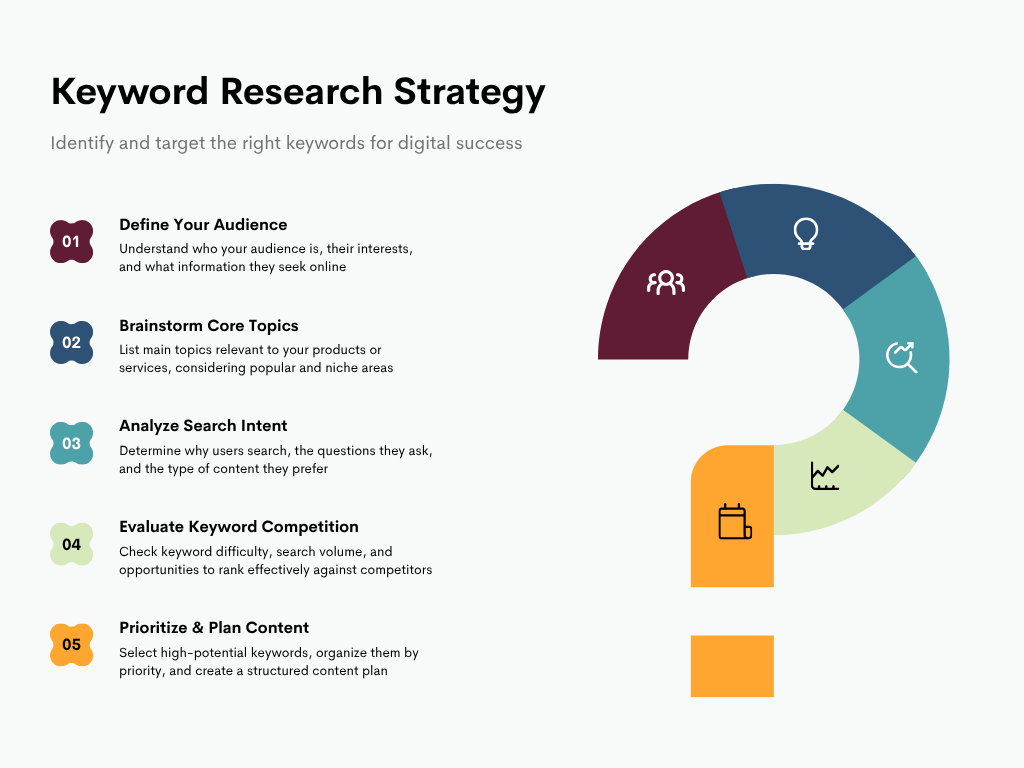
Choose a niche (like digital marketing, blogging)
- Find 10–15 low competition keywords
- Write one article for each keyword
- Use in title, headings, and content
- Keep content clear and helpful
8. Keyword Research – Final Tips for Better Results
- Focus on user needs, not just keywords
- Write simple and clear content
- Use examples when possible
- Update your content regularly
- Practice research daily
With time, you will understand which keywords will work better.
Conclusion:
No matter what the niche is, if you want to get a rank, keyword research is the main topic of SEO. If you understand it practically, you have understood more than half of SEO.
It is not just in the title or heading, but stuffing is also a skill.
If you learn proper keyword research, usage and stuffing, volume, difficulty and whether the content is human written, then the chances are that Google will definitely rank your page.