
What Is an Informational Keyword?
Informational keywords are those search terms people usually type when they just want to know or understand something, not really to buy. For example, someone searching “what is SEO” or “benefits of yoga” is just looking for knowledge. In past days, many websites was more focused only on transactional keywords like “buy shoes online,” but now informational queries became very important too. In SEO, keyword intent matters because it shows what the user actually want. Over time, informational content help a brand grow authority in its niche. So even if the intent is not purchase right away, it still play a big role in traffic and long‑term growth.
Examples include:
- what is SEO
- how to rank a website
- tips for keyword research
- guide to content marketing
Types of Keywords (Informational, Navigational, Transactional)
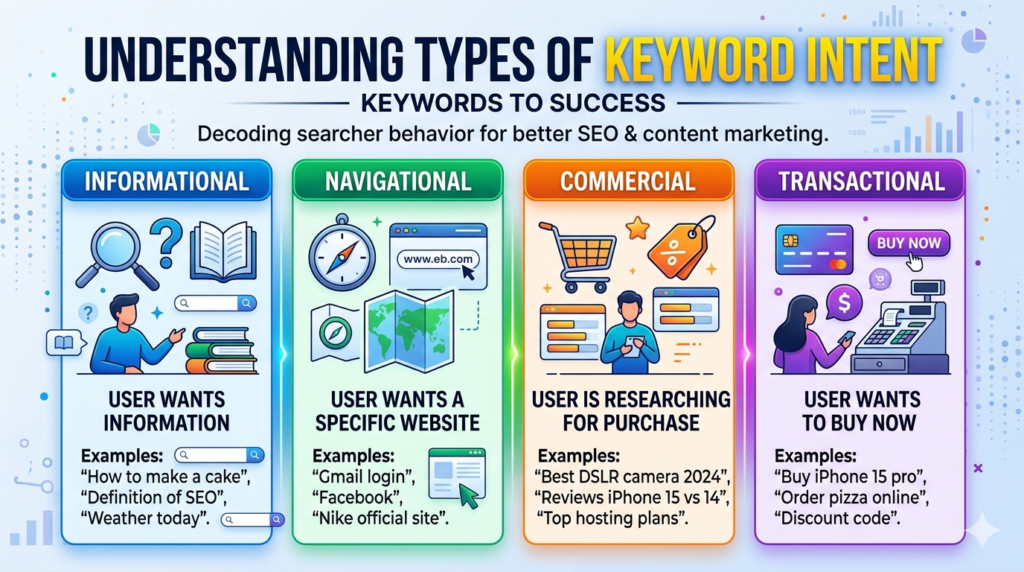
1. Informational keyword Intent
Informational keyword intent simply means the purpose behind a search where the user is looking for knowledge, not to buy something. For example, when someone types “how does SEO work” or “benefits of meditation,” the intent is informational. In past times, many websites was focusing more on transactional intent, like “buy laptop online,” but now informational intent became very important too.
Examples:
- how search engines work
- benefits of SEO
- what is backlink
2. Navigational Keyword Intent
Navigational keyword intent is when a person search something online because they already know the brand, website or platform they want to visit. For example, typing “Facebook login,” “YouTube,” or “Amazon India” shows navigational intent. The user is not really looking for new information or to buy directly, they just want to reach a specific site. In past times, many marketers was not paying much attention to navigational intent, but now it became important because it shows brand awareness.
Examples:
- login pages
- brand searches
3. Transactional Keyword Intent
Transactional keyword intent is basically when someone search online because they are ready to do an action, most often buying or signing up. For example, queries like “buy iPhone 15,” “cheap flight tickets Delhi,” or “subscribe Netflix” show transactional intent. The user is not just learning or exploring, they want to complete a deal. In past days, businesses was already focusing on these type of keywords since they bring direct conversions, and even now they stay very important.
Examples:
- buy SEO tools
- best hosting plans
Why Informational Keywords Are Important?
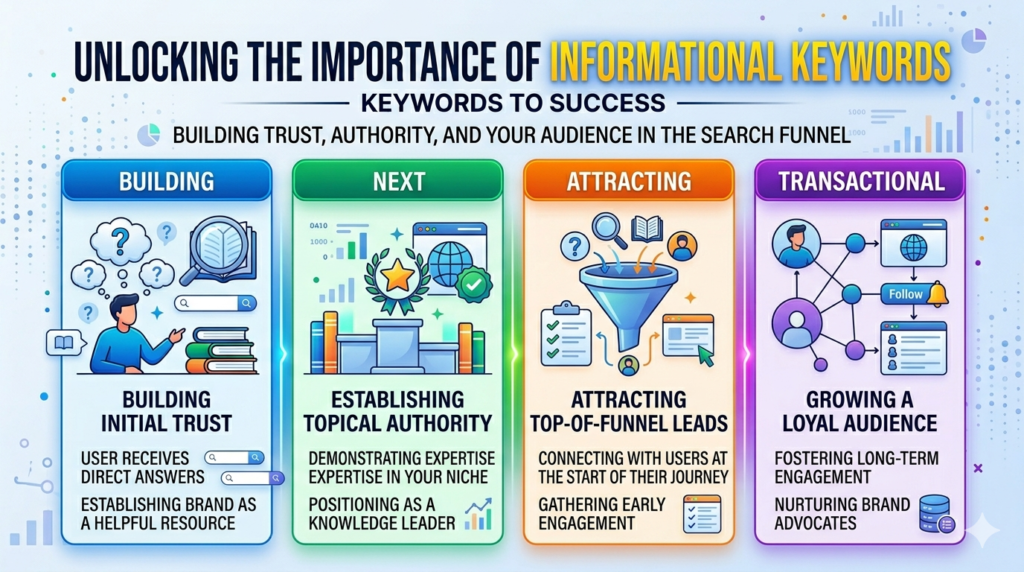
It helps in:
- Driving organic traffic
- Building authority
- Educating users
- Improving search visibility
How to Find Informational Keywords?
Use Keyword Research Tools
Analyze Search Engine Results
Focus on Long-Tail Informational Keywords
These improve targeting and user engagement.
How to Use Informational Keywords in Content?
1. Create High-Quality Content
Content should:
- Answer user questions
- Provide detailed explanations
- Be easy to understand
Optimize Headings and Structure
Use your informational keyword in:H1 title, H2 and H3 headings, Introduction
This helps search engines understand your topic.
Add LSI Keywords Naturally
Along with your seed keyword.
Avoid overstuffing and keep it natural.
Benefits of Informational Keywords in SEO
- Using informational keywords offers long-term SEO benefits.
- Build topical authority
- Increase website traffic
- Improve engagement
- Support internal linking
Common Mistakes to Avoid
Many beginners misuse informational keywords.
One mistake is focusing only on high-volume keywords without considering user intent. Another is not using LSI keywords, which reduces content depth.
Some also create thin content that doesn’t fully answer user queries, leading to poor rankings.
Advanced Tips for Informational Keywords
To get better results, focus on content depth and relevance.
Use variations of informational keyword:
This improves your chances of ranking higher.
Conclusion:
Informational keyword intent is all about users searching because they want answers or knowledge, not to buy something right away. For example, queries like “how does SEO work” or “benefits of meditation” show this intent. In past times, many websites was focusing more on transactional keywords, but now informational intent became very important for building traffic and trust.