
What is Search Engine?
In search Engine, users use applications to find information on the Internet, such as Google. It is an application that shows results after entering a keyword, which is helpful for you. Every user should understand how a search engine works; this expresses a basic understanding about Google.
This application was created so that people could search for information on it. We can perform search engine tasks on Google, Yahoo, and Bing.
Today, it is one of the most useful software, without which most of the world’s business could come to a halt.
Popular examples include:
- Google Search
- Bing
- Yahoo Search
How Does a Search Engine Work?
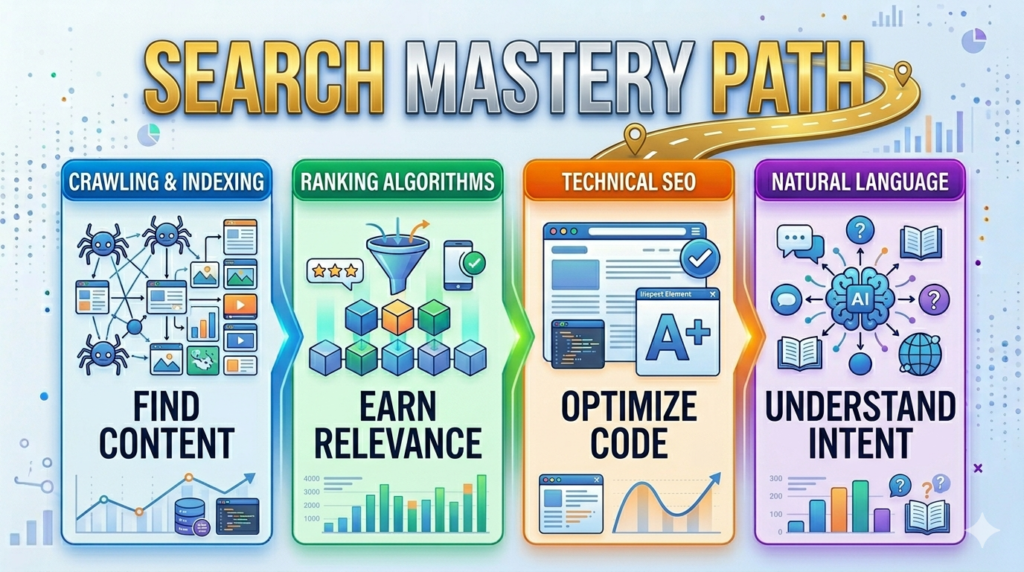
To understand a search engine, you need to know its three main processes: crawling, indexing, and ranking.
Understanding a search engine is not very difficult; you just need to know the process of these three things: crawling, indexing, and ranking.
Search Engine Crawling
Crawling is the first step where a search engine sends bots (also called spiders) to discover new and updated content across the web.
Visit web pages, Follow links, Collect data
This process is often referred to as, website crawling, search engine bots, web crawler process
Without crawling, a search engine cannot find your website.
Search Engine Indexing
To understand a search engine, you need to know its three main processes: crawling, indexing, and ranking.
Understanding a search engine is not very difficult; you just need to know the process of these three things: crawling, indexing, and ranking.
Search Engine Crawling
Crawling is the first step where a search engine sends bots (also called spiders) to discover new and updated content across the web.
Visit web pages, Follow links, Collect data
This process is often referred to as, website crawling, search engine bots, web crawler process
Without crawling, a search engine cannot find your website.
Search Engine Indexing
After crawling, the search engine stores data and organizes the collected data in a massive database called an index.
Indexing involves, Analyzing content, Understanding keywords, Storing page information
Search Engine Ranking
Ranking is the final step where the search engine decides which pages to show and in what order.
The search engine uses algorithms to evaluate, Content relevance, Keyword usage, Website authority, User experience
Key Components of a Search Engine:
1. Search Engine Algorithms
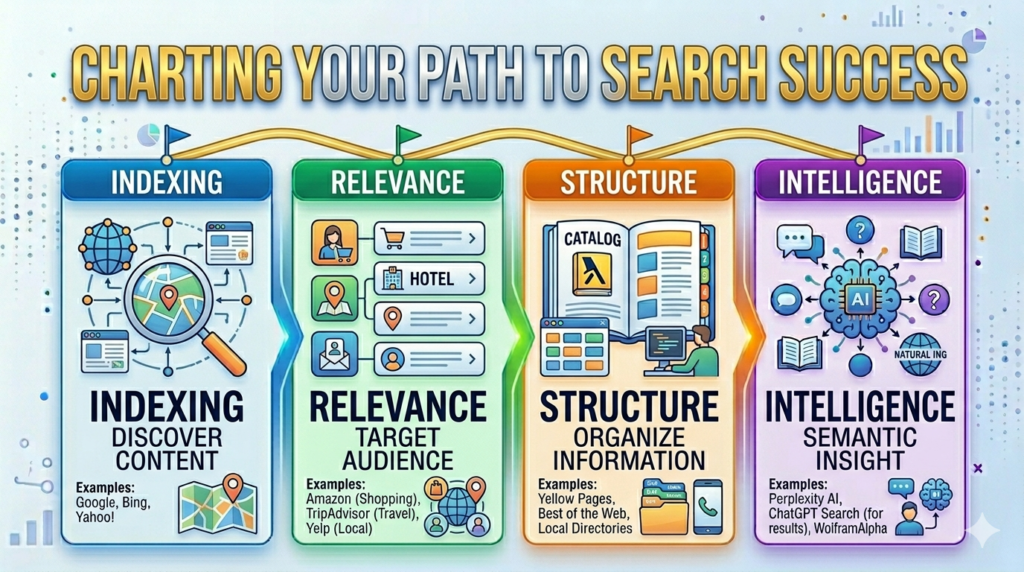
Search engine algorithms was always a bit tricky system that decide which page show first. In past they only look at keywords and links, but now it is working with AI and machine learning to understand what user really mean. It crawl pages, index them, and then ranking happen based on quality, relevance and sometimes user engagement.
For example, Google Search uses advanced algorithms to determine which content is most relevant.
Examples of related terms:
- keyword research
- search queries
- keyword relevance
2. Search Engine Results Page (SERP)
Search Engine Results Page, often called SERP, is the screen that appear when someone type a query in search engine. In early days it was mostly just a list of blue links, but now it is showing many kind of results like ads, images, videos, maps and even quick answers. The algorithm decide which website come on top, and sometimes it feel confusing because ranking keep changing. SERP is important for websites because higher position usually mean more visitors. In present time, search engines try to make SERP more user friendly, adding snippets, FAQs and even AI generated summaries.
It includes:
- Organic results
- Paid ads
- Featured snippets
Types of Search Engines:
1. Crawler-Based Search Engine
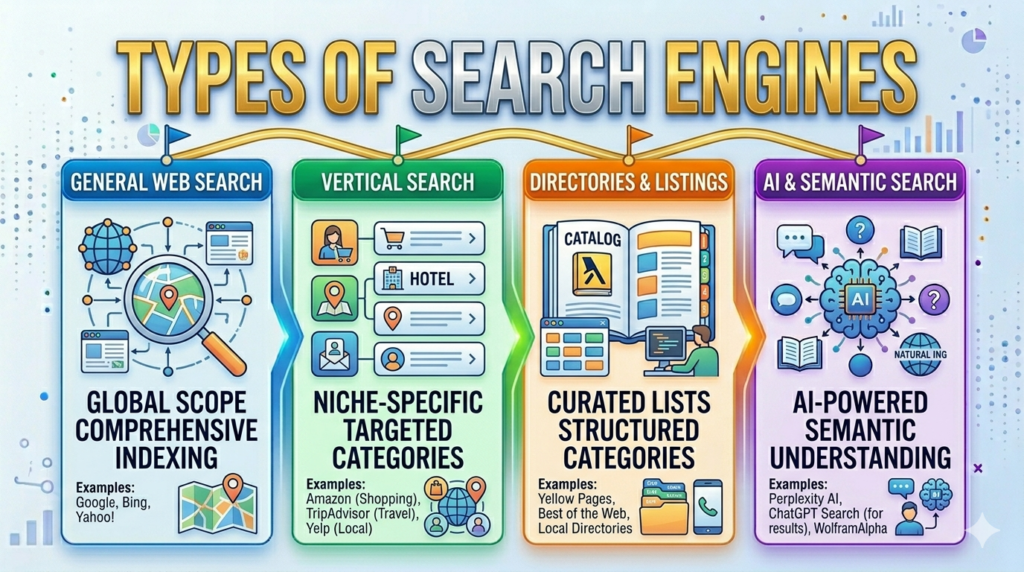
Crawler-based search engine is a kind of search tool that use small programs called crawlers or spiders to move around the internet. These crawlers visit websites, read the pages, and then save the information into the search engine’s big index. In old times, crawlers was very basic, they only follow links and collect words. Now they are more smart, they can check page quality, structure, and even handle images or videos. The process usually go in three steps: crawling, indexing, and ranking. For website owners, making pages easy for crawlers is important, otherwise people may not find them. Overall, crawler-based search engines was and still is the main way information get discovered online.
2. Search Engine Results Page (SERP)
Search Engine Results Page, often called SERP, is the screen that appear when someone type a query in search engine. In early days it was mostly just a list of blue links, but now it is showing many kind of results like ads, images, videos, maps and even quick answers. The algorithm decide which website come on top, and sometimes it feel confusing because ranking keep changing. SERP is important for websites because higher position usually mean more visitors. In present time, search engines try to make SERP more user friendly, adding snippets, FAQs and even AI generated summaries.
It includes:
- Organic results
- Paid ads
- Featured snippets
3. Crawler-Based Search Engine
Crawler-based search engine is a kind of search tool that use small programs called crawlers or spiders to move around the internet. These crawlers visit websites, read the pages, and then save the information into the search engine’s big index. In old times, crawlers was very basic, they only follow links and collect words. Now they are more smart, they can check page quality, structure, and even handle images or videos. The process usually go in three steps: crawling, indexing, and ranking.For website owners, making pages easy for crawlers is important, otherwise people may not find them. Overall, crawler-based search engines was and still is the main way information get discovered online.
4. Directory-based search engine
Directory-based search engine is a type of search tool that organize websites into categories instead of crawling them automatically. In past, these search engines was very popular because they help users find sites by browsing topics like “Education,” “Sports,” or “Technology.” Human editors usually add and review the sites, so the quality was more controlled, but it also take more time.
Importance of Search Engine in SEO
Search engines play a very big role in SEO, but explaining it in a human way means not making it too perfect. A search engine is like the main door where people enter the internet. Search engines keep updating rules, so SEO people must adjust again and again. For example, today AI is used to check meaning of content, so writing clear and helpful text is better than repeating words. Still, it is not always easy, because results can shift and competition is high.
Benefits include:
- Increased organic traffic
- Better online visibility
- Targeted audience reach
How to Optimize for Search Engine?
On-Page SEO for Search Engine
On-page SEO is basically the base of ranking any website on Google. Like, if your content is not properly optimized, even a really good topic might not rank at all.
But when you start using the right structure, place your keywords in the correct spots, and follow a simple content strategy, your chances of ranking go up a lot.
In this guide, I’ll just walk you through what you actually need to do, step by step, in a simple way so you can easily understand and try it yourself. It includes things like your content, headings, keywords, images, and some basic HTML stuff
It basically helps search engines understand what your content is about in a clear way
Technical SEO for Search Engine
Technical Seo comes when sometime your website is not ranking and you might think the problem is in the content, but it could also be a technical problem. In many cases, it has been seen that fixing technical issues improves the website’s ranking. Technical, in simple words, means focusing on how your website is built and how a search engine can easily access that website.
Off-Page SEO for Search Engine
Off-page SEO is basically all the things you do outside your own website to make it rank better. It’s more about building trust, authority and reputation than just fixing stuff on the site. When you do strong off-page optimization, search engines can figure out if your site is reliable or not. They look at how other websites and even users are interacting with your site before they decide where to put you in the rankings.
COMMON SEARCH ENGINE MYTHS
Many people think they know how search engine works, but often some myths stay around. One myth was that ranking happen instantly, but actually it take time. The search engine crawl pages first, then index them, and only later ranking is decided. Another myth is that only keywords matter. In truth, search engines also check user experience, content quality, and backlinks. Sometimes people forget that even small things like site speed or mobile design affect results. So while keywords was important before, now they are just one part of the bigger picture.
Future of Search Engine
Future of search engine is looking very different from how it was before. In past, search engines only show simple links, but now they already start mixing answers, images, videos and even AI summaries. In coming years, search engines will keep using more artificial intelligence to understand what user mean, not just what words they type. It may also give more personalized results, based on history and location. Sometimes it feel fast, sometimes changes happen slow, but overall the trend is clear: search engines are moving from just finding pages to actually giving direct solutions. They was simple before, they are smarter now, and they will keep evolving with technology.
Modern trends include:
- AI-based search results
- voice search optimization
- semantic search
Conclusion:
A search engine is a tool that help people find information fast, but it don’t work in one single step. First it crawl pages, then index them, and later ranking happen. When you understand this process, it become easier to plan SEO and improve website performance. Using search engine ideas together with LSI keywords like optimization, ranking factors, keyword relevance, and organic results can make content stronger. In past, many thought only keywords was enough, but now quality and user experience also matter. Learning how search engine works is the first step for building visibility and long‑term success online.